Changing the South's Harsh Rules to Restore Voting Rights to Former Felons
Facing South
In nine states from Nevada to Tennessee, anyone who has lost been imprisoned and lost thier right to vote, cannot regain it until they pay off any outstanding court fines, legal fees and victim restitution. In Alabama, that requirement has fostered an underclass of thousands of people who are unable to vote because they do not have enough money.
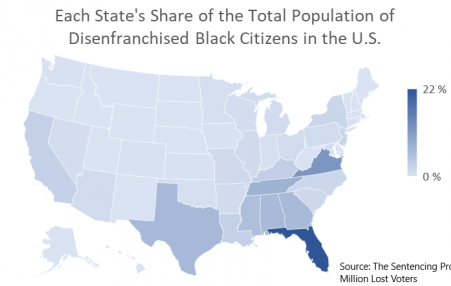
While all Southern states have laws disenfranchising people while they are incarcerated and on probation or parole, Florida stands out with one of the nation's most restrictive felony disenfranchisement laws — one of only four states that impose a lifetime ban on voting for anyone convicted of a felony. The others are Virginia, Kentucky and Iowa.
Should anything go awry with the 2020 count, it could have political implications affecting how voting districts are drawn or how language minorities can access the ballot. Important funding decisions are also driven by Census data. Nationwide, nearly $600 billion in federal funding is allocated to states based on Census numbers, according to a recent report by the George Washington Institute of Public Policy. Southern states receive $179.2 billion of that total.
Spread the word