Du Bois and the Jefferson School of Social Science
Marxist Sociology Blog
Reader Comments: Global Nuclear War Danger - Avoiding the Unthinkable; Hillary Clinton and Working Class Voters; Art as Politics: Star Wars New Movie; What Now for the Left; Viewers debate the Russian-Election Frenzy; Brazil; W.E.B. DuBois and the Working Class; Student Digital Literacy and Technology; Butter - Good for You?; #NoDAPL December Month of Actions; Responsible and Ethical Cuba Travel; Special - Holiday Book Offers; and more ...
Reader Comments: Two Weeks to Go - Dump Trump, Defeat Racism and Misogyny; Learning to Claim Our Victories; Bernie Sanders' Donor Network Comes Thru for House and Senate Candidates; John Oliver on Third Parties; Support Hillary, Then Fight Like Hell; and: Remembering Tom Hayden; Syria; Silencing Librarians; DuBois and the Fight for Peace; Bob Dylan; Announcements; and more...
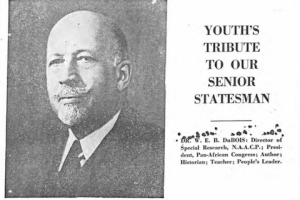
The convention's keynote address was delivered by noted sociologist, historian, civil rights activist and author W.E.B. Du Bois. Titled "Behold the Land," the speech was one of the last major orations by Du Bois, who was 78 at the time. It remains timely today with its calls to unite blacks and working-class whites.
Gaining social control over the economic life of society - achieving socialism, in a word - requires not only that we know that the democratic republic is the staging ground for such change. It also requires that we recognize that the evidence of the future we want is visible and "invading" our present, to borrow a term from C. L. R. James, in forms that exist in the current conditions of our social life.
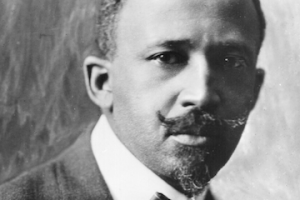
"Black Art Matters." If there were a way to sum up the thrust of this essay in one very brief sentence then that would be it. W.E.B. DuBois is one of those thinkers who needs very little introduction: lifelong socialist and Black liberationist, founder of the N.A.A.C.P., author of what is still to this day one of the definitive books on Black Reconstruction in the south. What is often overlooked is how central art was to DuBois' ideas about Black freedom in the U. S.
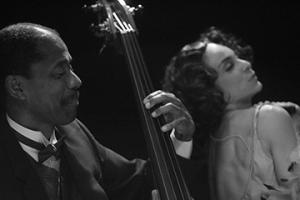
In the American Black community, during the years leading up to the Harlem Renaissance, there was a sense of building artistic expression. Outlets and avenues for its poets, musicians, novelists, artists, and actors were few. But in 1918, as the first great World War concluded and thousands of African-American soldiers returned home victorious, this mountain of artistic expression was now ready to explode.
Herbert Aptheker, to introduce the man by his highest prestige, was an early scholar of African American uprisings against slavery, and in his middle years, the director and coordinator of the W.E.B. DuBois Papers, one of the great archival triumphs of US history at large. For many in the 60s, through his books and public apperances, a generation became aware of the Communist Party, U.S.A.
I celebrate Radical Reconstruction, a brief moment of glory, no matter how blindly and halfheartedly we, as a nation, did it. Did Reconstruction end racism? No. Does that make it a failure? No again. Considering it a failure is like considering the civil rights movement a failure because it only abolished segregation and not racism.
Spread the word