Chicago Does Little to Control Police Misconduct - or Its Costs
Chicago Reporter
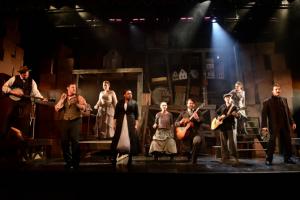
“Songbook” frames its story through the memory of Lucy Parsons, the daughter of a slave who later becomes the widow of “anarchist martyr” Albert Parsons, a white man who had served in the Confederate Army, but then found his calling as a charismatic labor leader. There are unquestionably distant echoes of terrorist activity in our own time in this show, along with enduring issues of income inequality, police brutality, and a compromised judiciary and media.
Chicago’s democracy is being distorted by an overwhelmingly, white, wealthy and male donor class. But public financing provides a clear solution. The “Fair Election Ordinance,” introduced on January 13, 2016 would match all small donor contributions up to $175, increasing the influence of the most diverse small and mid-level donor pool.
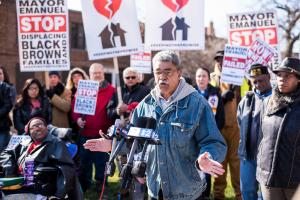
If you say you’re on the freedom side, then that means you will join us in asking the rich to pay their fair share; calling on the city and state to stop the attacks on public and higher education; in asking the banks to end their predatory deals that strip vital dollars from our schools; in fighting for stronger neighborhoods and job creation, and access to health care and not just health insurance.
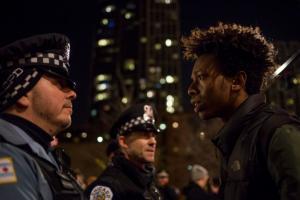
If you are not severely and wholeheartedly dealing with racism, you are not going to get to the bottom of this issue . . . CPD's own data gives validity to the widely held belief the police have no regard for the sanctity of life when it comes to people of color . . . at every step of the way, the police oversight system is riddled with legal and practical barriers to accountability.
The Sun-Times previously has reported that, over the past seven years, the police have spied on anti-Olympics protesters, the Service Employees International Union, critics of the visiting Chinese premier, the Occupy movement and NATO Summit demonstrators. Following nationwide protests over the shooting of 18-year-old Michael Brown in Ferguson, the police here monitored black demonstrators and kept logs of events led by the Rev. Jesse Jackson and other groups.
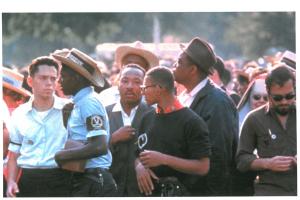
In September 1965 a dozen or so members of Dr. Martin Luther King Jr.’s southern field staff moved into the West Side Christian Parish’s Project House in the heart of Chicago’s Near West Side, joining other volunteers already living there. Black and white, male and female, most of them still in their early twenties, they had already been tested by civil rights struggles in the South.
Spread the word