For America’s Sake, We Need Answers about Russia. Now.
Bill Moyers and Company
In some of the most brutal authoritarian regimes, labor unions have been the anchor of a broad working-class movement for democracy. Think South Africa, Brazil, South Korea. Our worker movements, political movements and unions must be wary of co-optation. We are not here for one-off gains for some of us. We are here to build broader movements for all of us. The minimum wage is a tool for organizing as much as it is a policy outcome.
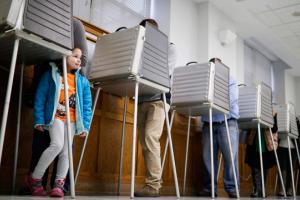
In a country where nearly 93 million eligible Americans did not vote in the 2016 presidential election, government officials should be investigating how to make the nation’s electoral process more inclusive, rather than searching for ways to place additional burdens on eligible Americans’ access to the polls.
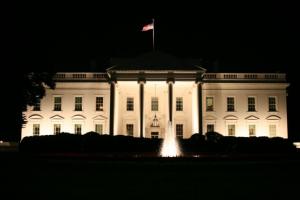
In November Donald Trump announced that his family will not live in the White House when he is inaugurated. Trump's announcement has implications for all of us. Who will pay for the security required for Trump's New York-based family? Who will bear the costs of the disruptions caused by frequent presidential flights to and from New York, not to mention the motorcades in and out of midtown Manhattan? The answer is: taxpayers or, as we used to be called, the public.
What could emerge from an understanding of the struggle between the two proletariats and its connection to US democracy and institutions is a more powerful and forward-looking narrative of class and race than either a utopian universalist liberalism or a narrow-minded working class incapable of advancing democracy.
Fidel Castro's life, and the example of the Cuban Revolution, demonstrates the enduring relevance of state power. It is fundamentally irresponsible for anyone on the left to think one can avoid the question of power, and let someone else face its contradictions and deformations. Somebody will exercise it, for good or ill. Fidel Castro embraced this question, choosing to wield power in as many ways possible for what he deemed social goods, even on the global scale.
The pro-Republican bias of the Electoral College derives from two main dynamics: it overweights the impact of mostly conservative voters in small population states and it negates entirely the mostly progressive votes of nearly half of African American voters, more than half of Native American voters and a major swath of Latino voters.
Rising inequality is largely to blame for this electoral upset. Continuing with business as usual is not an option. People have lost their sense of security, status and even identity. This result is the scream of an America desperate for radical change. People have a right to be angry, and a powerful, intersectional left agenda can direct that anger where it belongs. Thomas Piketty and Naomi Klein offer up interesting analysis.
Spread the word