Support for Unions is this Election’s Sleeper Issue | Column
Tampa Bay Times
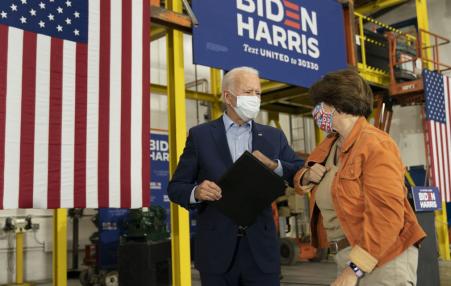 Americans are viewing unions favorably, and that could help Joe Biden.
 Americans are viewing unions favorably, and that could help Joe Biden.
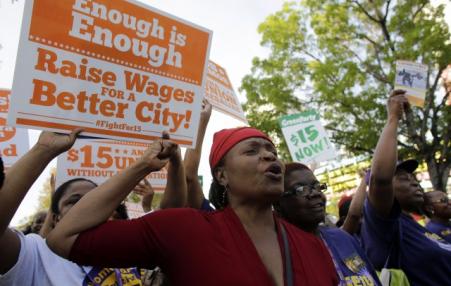 Workers rights under the law have suffered systemic neglect since the National Labor Relations Act was passed in 1935. Fixing it is a start, but much more needs to be done.
 The rise of inequality in America is the outcome of a very clear political agenda of disempowering and undermining workers. Corporate dominated globalization is a key part of undermining the bargaining power of workers by giving multinational corporations massive mobility, massive flexibility, and political power.
 A new report links the drop in union membership with the rise in income inequality. But labor activists are finding new ways to help workers.
 The manufacturing industry has been hit hard since China's acceptance in the World Trade Organization. The industry includes imports of computer and electronic parts and accounted for 56 percent of the $240.1 billion increase in the US trade deficit with China. An estimated 1,249,100 jobs were eliminated in the electronic industry.
 Historical discrimination, demographics, and public funding have left home care workers at the very bottom of the American work hierarchy. The wages these workers earn are painfully low: the median salary for a personal care aide is $19,910 annually, or $9.57 an hour; a home health aide earns $20,820 or $10.01 per hour. On the Bureau of Labor Statistic's list of 30 fastest-growing jobs, personal and home care aides are the worst paid.
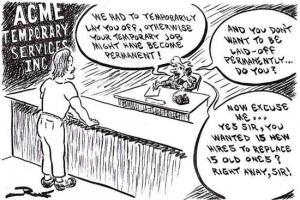 "Workers increasingly serve businesses that do not officially 'employ' the worker — a distinction that hampers organizing, erodes labor standards and dilutes accountability," said Catherine Ruckelshaus, general counsel for the National Employment Law Project, which advocates on behalf of low-wage workers. A recent Federal Reserve study showed that nearly 7.5 million people who are working part time — contract workers included — would rather have full-time jobs.
 The loss of pensions at Boeing marks a major setback for unions, as employers typically follow the example of other employers at the bargaining table in terms of what constitutes a reasonable demand. Since the financial crash, unions have given up pensions for new hires at large, profitable, industry trendsetters such as General Electric, Verizon, Honeywell and now, Boeing.
Spread the word