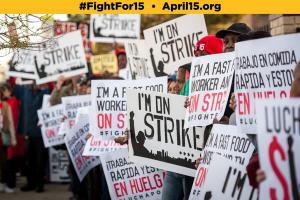
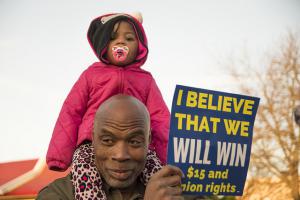
Fast Food Workers in 236 Cities Pull Off Largest Strikes Yet as Other Low-wage Workers Join Fight
In These Times
True, a Big Mac here costs more — $5.60, compared with $4.80 in the United States. But that is a price Danes are willing to pay. “We Danes accept that a burger is expensive, but we also know that working conditions and wages are decent when we eat that burger,” said Soren Kaj Andersen, a University of Copenhagen professor who specializes in labor issues.
BREAKING NEWS: The general counsel of the National Labor Relations Board ruled on Tuesday that McDonald's is jointly responsible for workers at its franchisees' restaurants, a decision that if upheld would disrupt longtime practices in the fast-food industry and ease the way for unionizing nationwide.
Corporate interests have taken credit for reducing private-sector unions to a fraction of their former strength, and for eroding public-sector collective bargaining, especially since the 2010 “Tea Party midterms.” A resurgence in low-wage worker organizing, sparked by growing inequality in the United States, promises to help defend the rights—and paychecks—of vulnerable workers. But corporations and their paid shills aim to snuff out the movement before it catches fire.
Walmart workers and supporters in the labor movement say they plan a new series of protests over wages and conditions at America's largest private employer, in which they will target the firm's family-friendly ethic ahead of its annual shareholders meeting next week. Hundreds of mothers who work at stores across the US plan a number of strikes in 20 cities nationwide. Others will travel to Walmart headquarters in advance of the upcoming shareholders' meeting next week.
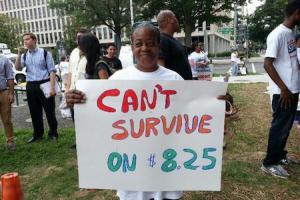
Fast food workers earn 1,200 times less than CEOs, the widest disparity of any U.S. economic sector. McDonald’s employees make about $8.25 per hour on average before taxes, and the corporation tacitly acknowledges it pays poverty wages. The company drew flak last year for a website that advised its employees to budget by spending nothing on keeping their homes warm, finding a place to live that costs less than $600 a month and spending $20 a month on health insurance.
Spread the word