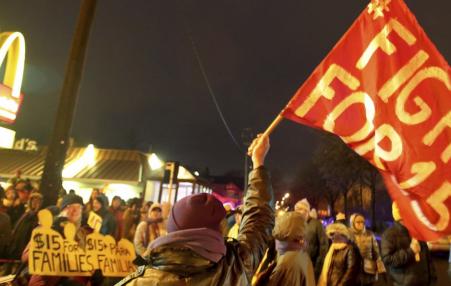
Since Fight for 15 launched in 2012, the idea of a $15 minimum wage has become a popular cause for progressive activists, and an increasingly popular talking point for Democrats occupying or seeking elected office.
Nearly 300,000 workers in Arkansas and an estimated 677,000 in Missouri would stand to see their pay rise if minimum wage ballot initiatives are successful on November 6.
An unsung shero of the early 20th century, Rose Schneiderman organized women to fight for laws to protect them from sexual harassment and assault in the workplace.
Bernie Sanders has an activist orientation. But without the looming threat of workers disrupting business as usual at Amazon, targeting Jeff Bezos wouldn’t have much teeth to it. With that connection he punches well above his weight.
The Michigan legislature seemed to take bold steps toward improving working conditions for its constituents: It passed legislation that would guarantee workers the right to earn paid sick leave, as well as a minimum wage increase to $12 an hour.
Prior to the introduction of an increased minimum wage in Ontario, the business community spread fear that unemployment would rise. Instead the rate has hit an 18-year low. Next time business cries wolf, workers should just pushback harder.
Washington DC voters passed approved an initiative to raise tipped employees minimum wage, but “Freedom Caucus” House leaders and Democrats on the DC city council say the vote shouldn’t count.
While the Fight for $15 campaign has forced dozens of states and cities across the U.S. to increase their minimum wage in recent years, activists have finally begun to turn their attention to tipped workers.
D.C.’s tipped workers are nearly twice as likely to live in poverty compared to the city’s overall workforce.The concerns with the tipped wage go beyond just money—the power dynamics of the tipping system allow discrimination and inequality
Spread the word