books

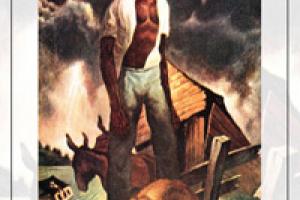
The Black Cultural Front: Black Writers and Artists of the Depression Generation

John Woodford The Black Scholar
Using original source material Brian Dolinar arrives at a different explanation of why the popular front of 30s and 40s broke up, than that of mainstream media of that time, and since. The key agents of disunity were not the Communists but the manifold assault by the rightwing establishment. The US ruling class used opinion-molding Red-scare and Red-baiting campaigns in the mass media and culture. A lesson for today with the re-growth of the radical right.

Tidbits - October 22, 2015 - Are You a Capitalist?; Sanders; Clinton; The Grassroots; Afghanistan; Puerto Rico; Palestine; Announcements; and more....

Portside
Reader Comments: Sanders forces question - Are You a Capitalist; Media and Country Debate Socialism like no time in a hundred years; Clinton; GOP Crackup; Afghanistan; Puerto Rico; Palestine; Leonard Peltier; Readers Debate Tipping; Rosalyn Baxandall Announcements: Marxist classes and book talks in New York; Paul Robeson play in Peekskill; Palestine Solidarity and Paid Family Leave events in New York

What Obama's Presidency Has to Tell Us

Leon Wofsy Leon's OpEd
Controversial posting, by a long-time peace and social justice activist - Obama is the best occupant of the office since the end of World War II. We're unlikely to elect anyone of his quality in 2016. Like all presidents post-World War II, he has presided over the world's most (super) powerful empire. 'American exceptionalism' and flouting superior military and economic might, the empire systematically generates negative consequences for peace at home and worldwide.

books

An American Communist Saga

Paul Buhle Portside
Herbert Aptheker, to introduce the man by his highest prestige, was an early scholar of African American uprisings against slavery, and in his middle years, the director and coordinator of the W.E.B. DuBois Papers, one of the great archival triumphs of US history at large. For many in the 60s, through his books and public apperances, a generation became aware of the Communist Party, U.S.A.

books

New Releases in African American Intellectual History

Chris Cameron African American Intellectual History Society
New books and research in African American history and culture. Recent or soon-to-be published books, which the African American Intellectual History Society feels would be of interest to readers. Regrettably the cost for some puts these out of reach of many - but there is always your public or school library. Suggest that these be ordered.

5 Vital Lessons from American Labor's Rise and Fall

James M. Larkin The Nation
America's unions have been in retreat for decades - but can history point toward some fresh starts? Steve Fraser's book The Age of Acquiescence reminds us that America's worker movement-100 years ago-was a rather militant creature compared to today. Then, it was worker militias, "bread and roses," and unabashed class conflict; now, it's defense and dwindling membership, and disappointing Democrats. How did we get here? Is there still power in a union?

Intersectional Black Power: CLR James on Capitalism and Race

Lawrence Ware and Paul Buhle Portside
To ignore race, C.L.R. James often said, in many contexts and many ways, was a disaster in any social understanding; only the ignoring of class would be worse. Or to put it in his own words: The race question is subsidiary to the class question, and to think of imperialism in terms of race is disastrous. But to neglect the racial factor as merely incidental, is an error only less grave than to make it fundamental.

books

Was Reconstruction a Success or a Failure? And Why It Matters - A Review and Commentary on This Nonviolent Stuff'll Get You Killed

Paul Richards, PhD Estuary Press
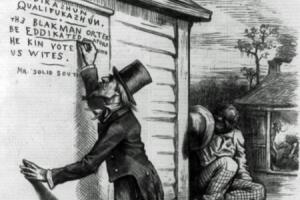
I celebrate Radical Reconstruction, a brief moment of glory, no matter how blindly and halfheartedly we, as a nation, did it. Did Reconstruction end racism? No. Does that make it a failure? No again. Considering it a failure is like considering the civil rights movement a failure because it only abolished segregation and not racism.
Subscribe to U.S. history